
Stainless Steel Table Knife Profile for OEM and Private Label Orders
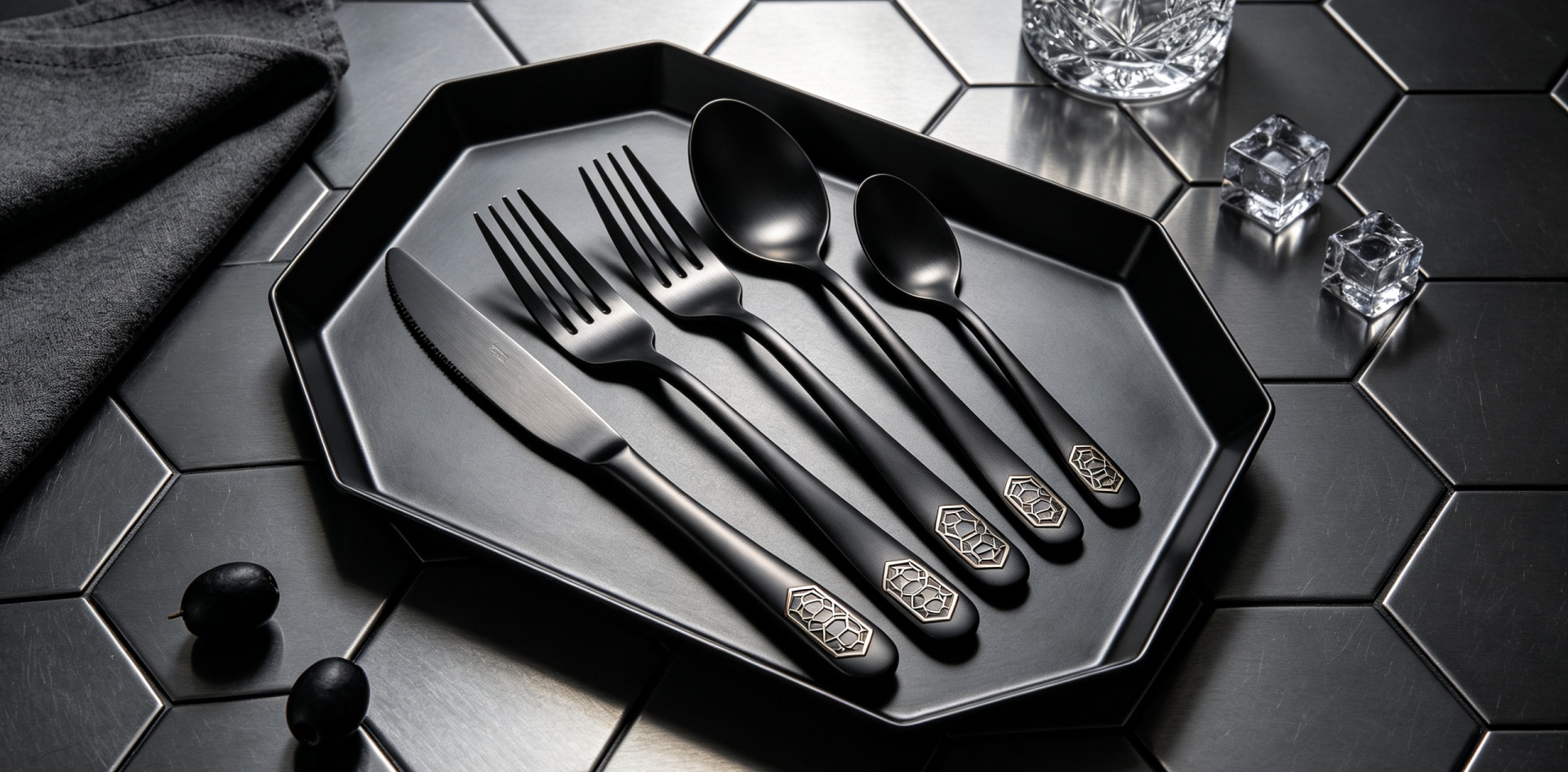
Stainless Steel Table Knife Profile for OEM and Private Label Orders
The overall profile of a stainless steel table knife plays an important role in how a cutlery collection is perceived. While buyers may first look at material, finish and dimensions, the continuous visual line of the knife can strongly influence whether the product looks modern, classic, substantial or lightweight.
For B2B customers developing stainless steel flatware, the profile should be considered as part of the complete product specification. It affects the relationship between the blade, central body and handle while also influencing how the knife matches the corresponding fork and spoon.
Homefelt factory specializes in stainless steel knives, forks and spoons and supports OEM, ODM, private label, wholesale and bulk production for international customers.
What Is the Profile of a Table Knife?
The profile describes the overall visual outline of the knife when viewed from the side or from a defined product reference position.
It can include the general movement of the blade, the central body and the handle, as well as how these areas visually connect across the product.
A relatively straight profile can create a clean and contemporary appearance. A more flowing profile can provide a softer or more traditional impression.
For B2B buyers, these differences can matter when developing a collection that needs to communicate a particular product style.
The profile is therefore not simply a matter of appearance. It can become part of the product identity.
Why Profile Matters in Flatware Collections
A knife is normally displayed together with a fork and spoon. Even though each utensil has a different functional structure, buyers often expect the three pieces to share a common design language.
The profile of the knife can contribute to that relationship.
For example, a collection with clean, controlled lines may require a knife profile that follows the same design direction as the spoon and fork. A more traditional collection may use softer visual transitions.
Homefelt can review the complete knife, fork and spoon collection during development so that the customer can evaluate the products as a coordinated range.
This is particularly useful for private label brands that want their stainless steel flatware to have a recognizable appearance across multiple products.
Choosing a Profile for Different Market Positions
Different B2B customers may have different expectations for the same basic stainless steel table knife.
A restaurant supply distributor may prefer a versatile design that can be used across different table settings. A hospitality customer may look for a more refined appearance. A private label brand may want a distinctive profile that helps separate its collection from standard products.
There is no universal profile suitable for every market.
The better approach is to start with the customer's target positioning and then determine which product characteristics support that positioning.
During an OEM or ODM project, Homefelt can review customer references and help translate the intended visual direction into a practical stainless steel knife specification.
Profile Evaluation During Sampling
A physical sample is useful when evaluating a knife profile because photographs do not always show the complete visual relationship between different areas of the product.
When reviewing a sample, buyers can look at the knife from several positions and compare it with the original drawing or reference product.
It is also useful to place the knife beside the matching fork and spoon.
This allows the buyer to determine whether the three pieces appear to belong to the same collection and whether the knife has the intended visual presence.
Once the customer approves the sample, the confirmed product becomes an important reference for bulk production.
Working From Drawings and Reference Samples
B2B buyers may approach a factory with different levels of information.
Some have complete technical drawings. Others provide a physical sample or product photograph. Some may only have an initial concept for a new private label collection.
Homefelt can work with these different starting points.
For an OEM project, the customer's existing specification can be used as the primary production reference. For an ODM project, the factory can use its manufacturing experience to develop a practical product based on the customer's requirements.
This flexibility allows customers to choose the level of development support that suits their project.
Maintaining the Approved Profile in Bulk Production
Once the knife profile has been confirmed, maintaining the approved product appearance becomes important during mass production.
This is particularly relevant for customers ordering large quantities or planning repeat purchases.
A distributor may reorder the same knife several times. A private label brand may keep the product in its catalog for years. In both cases, the original approved product needs to remain a clear reference.
Homefelt connects sample development with bulk manufacturing so that customer requirements can be transferred into production specifications.
This helps create a more stable reference for both initial and repeat orders.
Profile and Complete Product Specifications
The profile should not be considered independently from the rest of the knife.
Product development may also involve material specification, overall dimensions, blade requirements, handle details, finishing and packaging.
The purpose is to create a complete specification that accurately represents the customer's intended product.
For B2B buyers, this is more useful than focusing on a single visual feature without considering the complete knife.
Homefelt can coordinate these requirements during OEM and ODM development and provide support through the transition from concept to production.
Factory Experience in Stainless Steel Cutlery
Product development is easier when the factory understands how different specifications interact during actual manufacturing.
Homefelt has long-term experience in stainless steel cutlery production and has worked with international customers and well-known brands.
This experience supports projects involving customized knives, forks and spoons, whether the customer needs an existing product adapted to a new collection or a more extensive OEM development.
The factory can also provide relevant product information and supporting supplier documentation during the purchasing process.
Certifications and Supplier Information
B2B buyers often evaluate both the product and the manufacturing partner before placing a large order.
Depending on the project, buyers may review product specifications, samples, testing information and factory qualifications.
Homefelt has passed BSCI, SEDEX 4P, BRC, ISO9001 and Disney audits and has FAMA and FSC certifications for applicable requirements.
These materials can support supplier evaluation while the approved product specification remains the primary reference for the actual stainless steel cutlery order.
OEM, ODM and Private Label Manufacturing
Homefelt supports customers at different stages of product development.
OEM customers can provide their own product drawings, samples and specifications. ODM customers can begin with a product concept and work with the factory to develop the final product.
Private label customers can also create coordinated stainless steel knife, fork and spoon collections under their own brand.
For wholesale and bulk buyers, existing products can be selected and adapted according to market requirements, helping create a balance between customization and efficient production.
One-Stop Service for International Buyers
A complete cutlery project often involves several connected services.
Homefelt provides one-stop support covering product design, manufacturing, packaging and transportation. The service can be adjusted according to the customer's product requirements, market and expected order quantity.
Instead of coordinating different suppliers for product development, packaging and delivery, buyers can discuss the project through one service partner.
This can be particularly useful for distributors, hospitality suppliers, private label brands and customers planning large-volume stainless steel flatware orders.
Building a Long-Term Product Program
For B2B customers, the value of a stainless steel cutlery supplier extends beyond one production order.
A successful product can become part of a long-term collection, followed by repeat purchasing, new matching pieces and additional customized products.
A clearly defined knife profile can therefore become one element of a stable product identity.
Homefelt aims to work with customers as a long-term China service partner, combining stainless steel cutlery manufacturing experience with OEM, ODM, private label and one-stop service capabilities.
The factory supports customers from product development and sample confirmation through bulk manufacturing, packaging and transportation.
Stainless Steel Cutlery Sample Approval for OEM and Bulk Orders
Stainless Steel Flatware Presentation for OEM and Wholesale Collections
Related Article



