
Stainless Steel Table Knife Shoulder Width Control for OEM Production
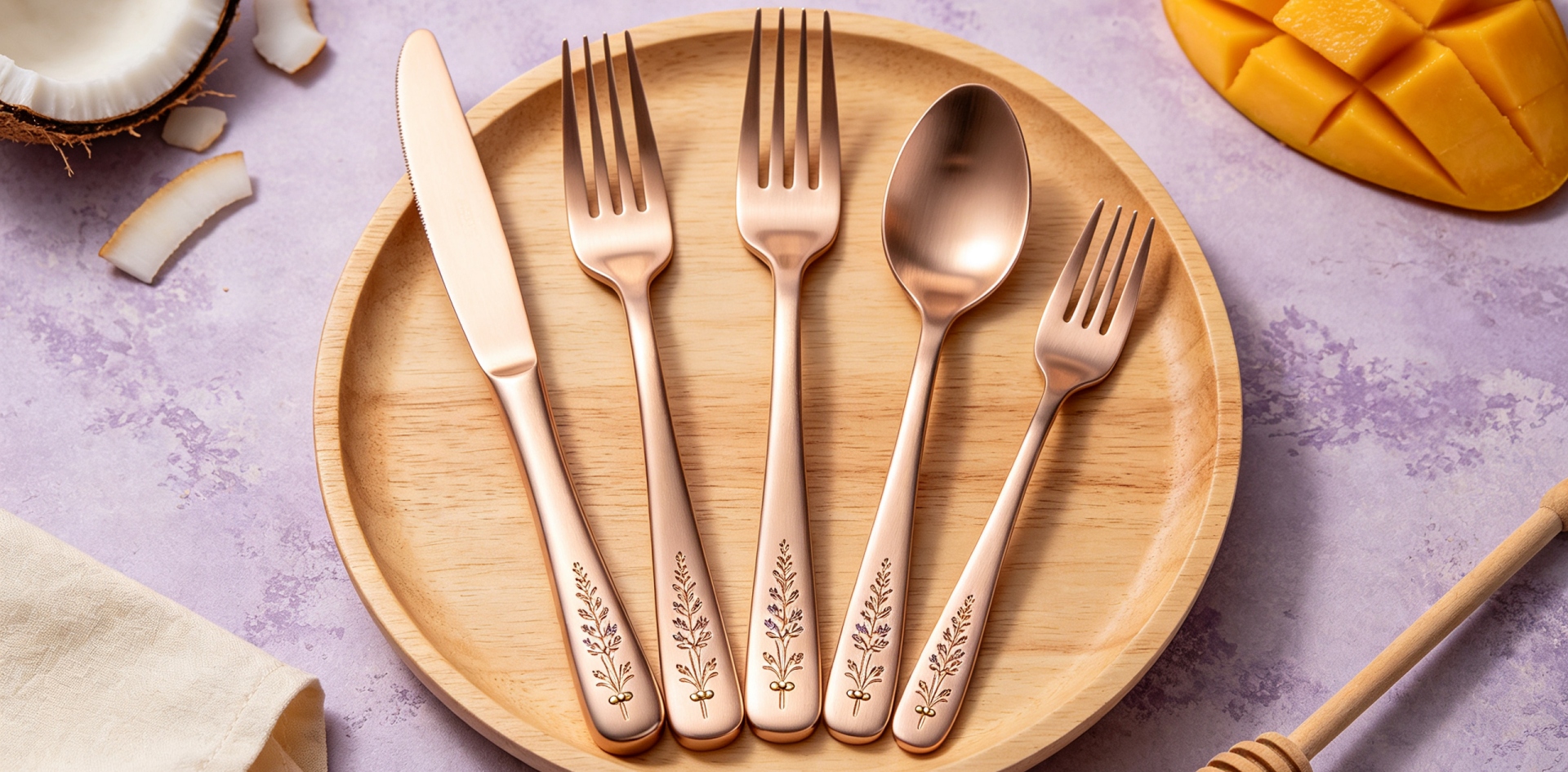
Stainless Steel Table Knife Shoulder Width Control for OEM Production
When developing a stainless steel table knife for an OEM or private label collection, buyers usually pay close attention to the overall length, blade shape, thickness, edge and handle design. One smaller geometric detail can also have a noticeable influence on the finished product: the shoulder width.
The shoulder is the area where the main blade section begins to transition toward the handle-side structure. Its width and shape influence the visual connection between the blade and handle, as well as the overall proportion of the knife.
For large-volume stainless steel cutlery production, controlling this area can help maintain consistency between samples and mass-produced pieces.
What Is Table Knife Shoulder Width?
Shoulder width describes the lateral dimension of the knife structure around the transition area between the blade and the handle-side section.
The exact reference point depends on the product design. Some knives have a clearly defined shoulder, while others use a smoother or more integrated transition.
Because table knife designs vary significantly, the shoulder should be defined according to the actual technical drawing rather than relying on a general industry measurement.
For OEM manufacturing, the important point is to establish a repeatable reference that production and inspection teams can follow.
Why Shoulder Width Matters
The shoulder influences the visual balance of a table knife.
If the area is too narrow, the blade may appear visually disconnected from the handle. If it is too wide, the transition can appear heavy and change the proportion of the entire knife.
A controlled shoulder can contribute to:
-
Consistent blade-to-handle proportions
-
More predictable knife appearance
-
Better coordination between collection SKUs
-
Stable production dimensions
-
Easier sample approval and inspection
For private label buyers, these details become particularly important when a knife is part of a coordinated spoon, fork and knife collection.
Shoulder Width and Blade Proportion
A table knife is not simply a long metal piece with a handle attached. The blade, shoulder, handle and other functional areas need to work together as one design.
The shoulder width can influence how large or small the blade appears relative to the handle.
For example, two knives may have the same overall length and blade length but look quite different if their shoulder dimensions are different.
This is why a custom stainless steel knife manufacturer should evaluate the shoulder together with the overall profile rather than treating the dimension independently.
For OEM and ODM projects, the relationship between these dimensions can be established during product development.
Designing the Shoulder for Different Knife Styles
Different table knife styles may require different shoulder structures.
A classic commercial table knife may use a relatively straightforward transition, while a premium private label design may have a more defined shoulder or decorative transition.
Some modern collections use broader, cleaner surfaces, while others use more sculpted handle structures.
The shoulder width should therefore support the intended design language.
When a customer provides a reference product, Homefelt can examine the complete knife profile and help translate the visual requirements into practical production dimensions.
This is particularly useful when the buyer wants to create a similar design while developing an original private label collection.
Material Thickness and Shoulder Geometry
Material thickness can influence how the shoulder is formed and finished.
A thicker stainless steel blank may provide different forming behavior from a thinner material. The required material grade and thickness also influence how the knife responds during manufacturing.
Depending on the application, buyers may consider stainless steel grades such as 201, 304 or 430. The final choice should be based on the intended use, corrosion requirements, forming characteristics, appearance and cost.
For a new OEM table knife, the material specification should therefore be confirmed together with the shoulder geometry.
Homefelt can review these factors as part of the product development process rather than treating the dimensions as separate decisions.
Shoulder Width and Manufacturing Accuracy
Once a table knife design enters mass production, the shoulder needs to remain consistent from piece to piece.
Production variation can occur during blank preparation, forming, grinding and finishing. If the shoulder is not controlled at each relevant stage, the final outline may gradually deviate from the approved sample.
For this reason, the shoulder dimension can be incorporated into the product specification and inspection criteria.
Depending on the project, quality control may evaluate:
-
Shoulder width
-
Blade width
-
Overall knife length
-
Handle dimensions
-
Blade-to-handle alignment
-
Surface condition
-
Finished appearance
The exact inspection points should be established according to the approved drawing and sample.
From Sample Approval to Bulk Production
A physical sample is particularly useful when developing a customized table knife.
A drawing can define numerical dimensions, but the actual sample allows the buyer to evaluate the visual relationship between the blade and handle.
During sample approval, the customer can check whether the shoulder looks proportionate and whether it matches the intended collection style.
Once approved, the sample becomes an important reference for bulk production.
For large-volume orders, documenting the relevant dimensions helps production and inspection teams maintain the same standard throughout the manufacturing batch.
Shoulder Consistency Across a Flatware Collection
A table knife is often sold together with a fork and spoon.
Although the spoon and fork do not have an identical shoulder structure, the three products should still appear visually coordinated.
For example, if a collection uses a relatively substantial handle design, the table knife shoulder should not appear disproportionately narrow.
Likewise, a minimalist flatware collection may require a cleaner and lighter transition.
This is where collection-level product development becomes useful.
Homefelt can review the knife together with the matching fork and spoon so that the complete set maintains a coherent visual proportion.
Project Experience at Homefelt
Homefelt has extensive experience manufacturing stainless steel knives, forks, spoons and complete flatware collections for B2B customers.
For a customized table knife project, the factory can review product drawings, reference samples, material specifications and finishing requirements before production.
The development process can consider the relationship between blade geometry, shoulder structure and handle design.
This helps ensure that the approved appearance is also practical for repeatable mass production.
For private label brands and distributors, this approach can be especially useful when introducing a new collection rather than simply purchasing a standard catalog item.
Inspection and Quality Documentation
Professional B2B buyers may require product inspection information and factory qualification documents during supplier evaluation.
Homefelt has passed BSCI, SEDEX 4P, BRC and ISO9001-related requirements and has experience with Disney audits. The factory also holds FAMA and FSC certificates for applicable business requirements.
Project-specific inspection or testing materials can be discussed according to the customer's product and market requirements.
The most useful approach is to combine supplier documentation with product-level inspection so that both factory capability and actual cutlery specifications are properly addressed.
OEM, ODM and Private Label Table Knife Production
A customized table knife may be ordered as an individual SKU or developed as part of a complete flatware collection.
Homefelt supports OEM and ODM stainless steel cutlery manufacturing for knives, forks, spoons and sets, including private label and wholesale projects.
Customers can also coordinate product design, packaging and transportation through a one-stop service.
This allows the manufacturing plan to be adapted according to the customer's product positioning, market, order quantity and delivery requirements.
For buyers developing a new collection, having product development and manufacturing handled through one experienced factory can simplify communication and reduce unnecessary coordination between suppliers.
Why Experienced Manufacturing Matters
Shoulder width is a relatively small dimension, but it demonstrates how individual geometry can affect the overall appearance of a stainless steel table knife.
A capable manufacturer needs to understand the relationship between individual dimensions instead of producing each specification independently.
Homefelt has 40 years of experience in the stainless steel cutlery business and supports OEM, ODM, private label, wholesale and large-volume production.
The factory can work with customers from initial product drawings or samples through manufacturing, packaging and transportation.
The objective is to provide practical production support and build long-term cooperation rather than simply complete a single purchase order.
Planning a Custom Table Knife Project
If you are developing a new stainless steel table knife, providing the overall dimensions, material specification, reference sample and expected quantity can help the factory evaluate the project more accurately.
For a private label design, product drawings or visual references can also help establish the intended shoulder structure.
Homefelt can review the design and provide feedback on practical production requirements before sample approval and bulk manufacturing.
Related Article



