
Stainless Steel Table Knife Tip Shape Specification for Custom B2B Orders
Stainless Steel Table Knife Tip Shape Specification for Custom B2B Orders
The tip of a stainless steel table knife is a small part of the overall product, but its shape can have a noticeable influence on the knife's appearance and design identity. For B2B buyers developing custom stainless steel cutlery, the tip should therefore be considered as part of the complete knife specification rather than treated as an incidental detail.
Different table knife collections can use different tip profiles according to their design style, target market, and intended product positioning. A more traditional collection may use one visual treatment, while a contemporary private label range may require a different proportion and transition.
For importers, distributors, restaurant suppliers, hospitality projects, and private label brands, defining the knife tip during product development can help the factory reproduce the approved design more consistently during bulk production.
At Homefelt factory, custom stainless steel knives can be developed according to customer drawings, reference samples, product concepts, and specific market requirements. The knife tip can be considered together with the handle, blade, overall proportions, surface finish, and other agreed product details.
Why the Knife Tip Matters in Cutlery Design
A table knife is made up of several visually connected areas. The handle creates one part of the design, while the blade creates another. The tip forms the end of the blade and contributes to the overall silhouette.
Even when two knives have similar overall dimensions, differences in their tip shapes can make them look noticeably different.
For a B2B customer developing a new cutlery collection, this means the knife tip can become part of the product's visual identity. If the customer already has a reference sample, the factory needs to understand whether the tip shape is a critical feature that must remain consistent.
The tip should also be considered together with the transition from the blade toward the front of the knife. A well-defined specification gives the production team a clearer understanding of the intended shape.
Defining the Tip Shape During Product Development
When a buyer requests a customized stainless steel table knife, a factory may receive information in several forms.
The customer may provide an existing knife as a physical reference. Another customer may provide a drawing with dimensions. A brand may provide product images or a design concept and ask the factory to develop a production sample.
In each situation, the tip should be reviewed as part of the complete product rather than judged separately.
Important considerations can include the overall tip outline, the relationship between the tip and the blade, the visual transition toward the cutting area, and the relationship between the blade and handle.
The exact specification should be established according to the customer's product design. There is no single tip shape that is suitable for every stainless steel table knife project.
For this reason, sample development is useful. A physical sample allows the buyer and factory to confirm whether the visual proportions meet the intended design before the product moves into large-volume production.
Maintaining Consistency During Bulk Production
Once a customer approves a stainless steel table knife sample, the next challenge is maintaining the same design across a larger quantity.
Bulk production involves many individual pieces, so the factory needs a clear product reference. The approved sample can provide a visual benchmark, while production specifications can define the important characteristics that need to be controlled.
The knife tip should remain consistent with the approved design. Significant differences in the outline or transition can change the appearance of the entire knife, even if the overall length remains within the required specification.
This becomes particularly important when knives are supplied together with matching forks and spoons. The three pieces should have a coordinated design language.
For private label brands, consistency also matters for future reorders. A customer may sell the same cutlery collection for several years and expect a later production batch to maintain the original product appearance.
A documented specification can therefore become an important reference for both the initial order and future production.
Knife Tip Design and Different B2B Applications
Different customers may have different expectations for table knife design.
A restaurant supplier may prefer a practical and straightforward appearance that fits a broad range of dining environments. A hotel project may require a coordinated collection with a specific visual character. A retail or private label brand may want a more distinctive design that supports its product positioning.
These requirements can influence the choice of knife tip shape.
For commercial cutlery, the tip should be considered alongside the complete knife structure rather than selected only for visual appeal. The final product needs to match the customer's intended application, product positioning, and overall collection design.
This is why communication between the buyer and manufacturer is important during the development stage.
A professional supplier should be able to discuss the design details with the customer and explain which elements need to be confirmed before sampling.
Combining the Knife Tip with the Complete Cutlery Collection
A table knife rarely exists alone in a B2B cutlery project.
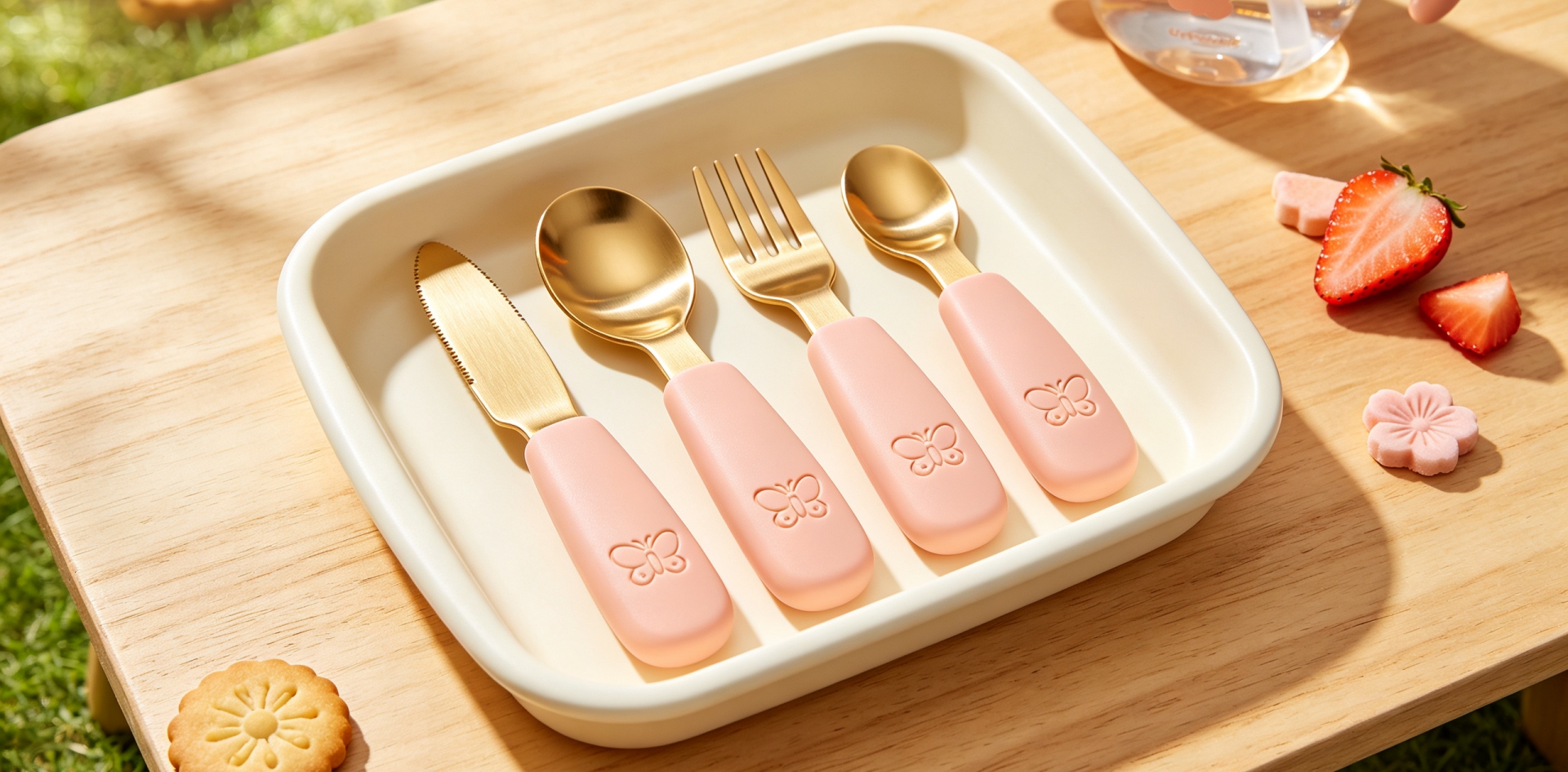
Most customers purchase knives together with forks and spoons as a collection. The handle design, proportions, surface treatment, and overall visual style should therefore work together.
For example, if the fork and spoon have a strong modern design, the knife tip should not appear visually disconnected from the rest of the collection.
When developing a custom set, the factory can review the knife together with the matching fork and spoon. This approach helps create a more coordinated finished product.
Homefelt factory provides customized stainless steel knives, forks, spoons, and cutlery sets for OEM, ODM, wholesale, and private label projects. Customers can provide their own designs or work with the factory to develop products according to their market requirements.
Product design, packaging, and transportation can also be coordinated as part of a one-stop service package.
Specification Confirmation Before Mass Production
Before a custom table knife enters mass production, buyers should confirm the important product characteristics clearly.
The specification can include the approved material, overall dimensions, blade requirements, handle details, surface finish, branding requirements, packaging, and other customer-specific information.
The knife tip should be included when its shape is an important part of the design.
For buyers working with multiple knife models, clear model references are also useful. A small difference in the tip or blade design may create a completely different product, so each customized model should have its own clear reference.
Once the product sample is approved, the agreed specification can become the basis for production and future reorders.
This helps reduce uncertainty when the same product needs to be manufactured again at a later date.
Factory Experience and Supporting Documentation
Product design capability is only one part of supplier selection. B2B buyers may also want to understand the factory's production experience, quality systems, certifications, and ability to handle large-volume orders.
Homefelt has 40 years of experience in the stainless steel cutlery business and has experience working with well-known brands. The factory has passed BSCI, SEDEX 4P, BRC, ISO9001, and Disney audits, and has FAMA and FSC certificates.
For customers developing customized stainless steel cutlery, relevant documentation and product specifications can be discussed according to project requirements.
The combination of product development experience, manufacturing capability, documented specifications, and quality management can provide buyers with a stronger basis for selecting a long-term supplier.
Building a Customized Table Knife Collection
A successful stainless steel table knife project is not simply about producing a basic knife at a target price. The finished product needs to reflect the customer's design requirements and remain consistent during bulk production.
The knife tip is one example of a relatively small specification that can have an impact on the final appearance. When these details are confirmed early, communication between the buyer and factory becomes clearer.
Homefelt factory supports OEM and ODM stainless steel cutlery manufacturing, private label development, wholesale orders, and large-volume production. Customers can customize knives, forks, spoons, and complete cutlery sets according to their own market requirements.
The factory can also provide an exclusive service package based on the customer's situation, covering product design, packaging, transportation, and other project requirements.
The aim is to provide a practical one-stop solution while helping customers establish products that can be supplied consistently and developed for long-term cooperation.
Stainless Steel Cutlery Measurement Control for Consistent B2B Production
Stainless Steel Cutlery Batch Traceability for Reliable B2B Supply
Related Article



